Showing posts with label Moving With Pets. Show all posts

הטסת חיות מחמד לחו"ל בבואנוס איירס בדרום אמריקה


         סוכנות  להטסת חיות
                                                        
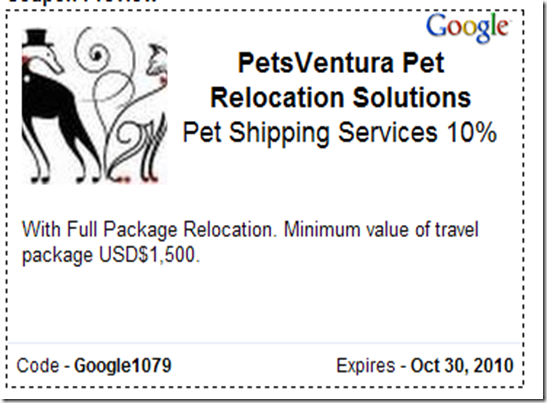
PetsVentura Pet Relocation Solutions


       חברה לניהול הובלת בעלי  חיים בעולם, שמשרדיה הראשיים בבואנוס איירס                                

הסוכנות עצמה יודעת לתת מענה  לכל הצרכים של בעלי חיות מחמד  לקראת טיסות בינלאומיות, 
 בין   לחופשה, טיסת עסקים או רילוקייש                              

  אנו מסייעים לך בדרום אמריקה עם סוכנים ישראליים


 +54 (11) 5292-6001   (Argentina)


+1 (818) 564-6022     (USA)


Pet in cargo hold

When you send your pet by cargo flight you might wounder where the kennel is placed at the airplane. 

I attached to this short note a picture to demonstrate the place in cargo hold. All kennels are secured in an area designated for live an
imals, away from the other baggage and cargo. Kennels are either strapped down individually or otherwise secured with tarp or netting.


The air in the cargo hold is the exact same pressurized, temperature-controlled air that circulates throughout the main cabin. But because the multitude of human bodies sitting together generates added warmth in the more insulated main cabin, the air is always cooler in cargo. To remedy this, most aircrafts have a “high/low” switch in the cockpit that sends additional warm air to cargo, which the pilot sets to “high” whenever there are live animals below. One pilot states that on a Boeing 777, the cargo air averages about 18°C (64.4° F) with the switch set to high, but can drop to below 10 °C (50°F) if mistakenly left on the low setting.

To help prevent such an accident, all pilots are informed on their load manifest when there are live animals “in the pit.” For caution’s sake, it would be wise to ask your flight attendant to confirm the pilot has “flipped the switch” and is aware of your precious cargo below!

PetsVentura Pet Relocation Solutions can assist you with all your questions regards to travel with pets.


Cost of Sending a Dog to the UK via PETS scheme (USA to UK)


This is one experiance of a person from the USA sending her dog from the USA to the UK . I hope this can give you an idea of the process and fees involve when you plan an international traveling with a pet.

Only Birtish Airways is a qualified to fly dogs from LAX to London-Heathrow!

  • Cost of ship would be over US$900 for the one-way flight .
  • Plus a $175 handling fee in the U.S.
  • GBP 310 ($470) fee for customs clearance in the UK . 
  • In addition, the USDA charges $111 per dog for providing the required paperwork approvals, so in the end, the up front costs were nearly $1700. 
  • Add to that the cost of all the vet visits to get him micro-chipped, vaccinated, de-wormed and blood-tested (another $300 easily).
  • Cost of buying  a replacement bed, leash, collar, and food bowl for the UK (since his US items couldn't accompany your pet in the crate)
  • The grand-total comes to somewhere around US$2,500.
DISCLAIMER - 

The information herein has been obtained from sources believed reliable.  While I do not doubt its accuracy, I make no guarantee, warranty or representation about it.


For accurate quotation contact PetsVentura Pet Relocation Solutions, www.petsventura.com

TRASLADOS DE MASCOTAS


El traslado de sus bienes, podría incluir a miembros muy especiales: sus mascotas. Por eso PetsVentura Pet Relocation Solutions (www.petsventura.com ) ofrece un servicio especializado para su transporte, que incluye no sólo los trámites esenciales para su retiro del país, sino también la selección del medio de transporte y de jaulas diseñadas para tal fin.


Costa Rica Import Permit

Most of the government offices in Costa Rica close for the week between Christmas and New Years and many take an extended vacation beginning the 18th of December and not ending until after the 3rd of January.


If you are trying to import a pet you will find that this rule applies to you and the offices that you need to be opened to facilitate your need for an import permit. While some offices will be opened on a skeleton crew they will not be issuing import permits during this time and will only resume this practice after the 3rd of January.


Pets can still leave the country but should not try to enter the country by the proper means or they risk being held by the customs officials for an unlimited period of time.

Airline Animal Incident Reports

Please note that the data for each airline does not necessarily indicate the quality of service that it provides, because the number of animals transported by each airline varies widely.  For example, Continental Airlines, which transports numerous pets, has emphasized that incident reports are filed for less than 0.05% of the pets that it transports.  Further, Southwest Airlines until recently did not transport pets (in contrast to service animals, as required by law), and no reports have been filed by Southwest to date. http://www.thirdamendment.com/animals.html
Picture0002

The reports essentially give pet owners information they can use to decide how to and whether to travel with animals.

Such statistics to someone who has lost a beloved pet is like quoting similar data on the safe transport of unaccompanied minors to the caregiver of a child who is lost en route.


Consider all the options before you decide to put your pet on an airplane. Here are some general guidelines:
 

Short-Nosed Dogs and Air Travel


In July 2010, the U.S. Department of Transportation released statistics that showed short-nosed breeds of dogs—such as pugs, Boston Terriers, boxers, mastiffs, Pekingese, Lhasa Apsos, Shih Tzus and bulldogs—are more likely to die on airplanes than dogs with normal-length muzzles.


 In fact, over the last 5 years, approximately one-half of the 122 dog deaths associated with airline flights involved these short-faced breeds. 25 of the 122 dogs that died over the 5-year period were English bulldogs, followed by 11 pugs, the only other breed in double digits. Although these numbers seem a bit scary, keep in mind that this is a very small number when compared to the hundreds of thousands of animals that fly every year.

As a result of the tighter space, they are prone to problems such as smaller-than-normal nostrils, a longer-than-normal soft palate, and a narrowed trachea (or windpipe).

Because of these abnormalities, they don't breathe as efficiently as dogs with normal-length snouts and can have difficulty cooling off when they're playing or exercising, or if they're stressed or overheated. And when they're stressed, their airway can actually collapse (either partially or completely) and cut off their airflow.

It's like breathing through a straw – if you gently suck through the straw, there's no problem getting air. But when you really try to suck hard through the straw, similar to what these dogs may do when they're stressed, exercising or overheating, the straw collapses and you don't get air. This doesn't always cause death, but it can cut off their oxygen supply temporarily and cause the dogs to collapse or overheat.

FLIGHT TRACKING

Do you want to take your family Pet away with you?Do you ship your pet by Cargo?

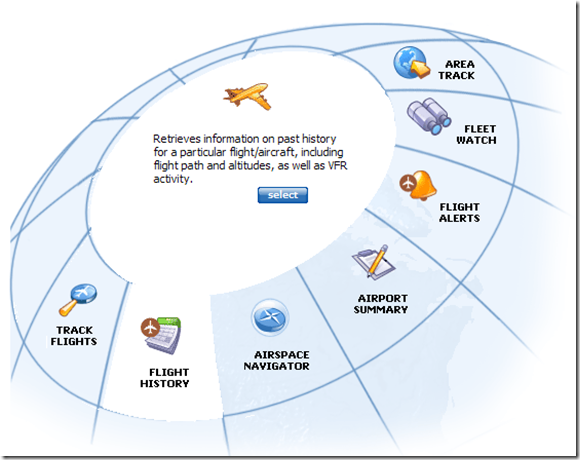
Tracking the status of your pet shipping can be done by using real-time system

Flight Tracking


FREIGHT Shipping Terms For Shipping Pets By Air Cargo

Here are a few shipping terms that you may encounter in regards to freight that you should know as you prepare and book your pet transportation  by air cargo .

Accessorial Fees

travel2 Charges for service beyond standard transportation pricing. Such fees would include special pickup or delivery such as residential areas or the pick up/delivery location requires an appointment.

Air Waybill

A bill of lading that covers both domestic and international flights transporting goods to a specified destination. This is non-negotiable and serves as a receipt for the shipper, indicating that the carrier has accepted the goods listed and obligating it to carry the consignment to the airport of destination according to specified conditions.


Taking the Buquebus Ferry from Buenos Aires, Argentina to Uruguay with your pets


PETS: DOGS CATS AND BIRDS


Buquebus (BOO-kay-boos) is the name of company which operates ferry services from Montevideo and Colonia to Buenos Aires.

Buquebus ferries run daily between Buenos Aires and two Uruguay destinations: Colonia and Montevideo. Colonia is a small historic town with cobblestone streets and restored buildings. Montevideo is the capital of Uruguay. The trip between Buenos Aires and Colonia takes 3 hours on the regular ferry or just 1 hour on the fast ferry. The trip to Montevideo takes 3 hours on the fast ferry

PETC (pet in cabin), it is allowed one per trip, which also does not exceed 6kgs including the kennel. Kennel measures: it should be of rigid material, with ventilation, impermeable base and its measures: 45x35x25 

The company does not provide the kennel. Pet`s bag will not be accepted!
Guided dogs: They travel in the cabin without the kennel and they travel freely, showing previously the training and vaccination certificate 

Important: all the animals have to present document of sales reservation, health certification, issued by the competent authority of each country.


Picture0002

How to avoid quarantine when travelling with a pet

Import A Pet to Peru


image Microchip

Peru requires that all incoming pets be equipped with a microchip for identification purposes.

Vaccinations

For dogs, the Peruvian government requires vaccinations for distemper, hepatitis, parvo virus, carre disease, leptospirosis, (DHLPP) corona virus, parainfluenza and rabies. For cats, the vaccinations include feline vioral rhinotracheitis, calicivirus, panleukopenia (FVRCP) as well as rabies. Other animals also need special vaccines.

International Health Certificate

Obtain an international health certificate. All countries have some form of certificate for pet travel. The certificate proves ownership of the animal and provides evidence of all vaccinations and microchip status. It also confirms that the pet is free of disease at the time of issue. Ideally this certificate should be obtained within 30 days of departure.

Endorsement Forms

If raveling from the United States to Peru with a pet, your international health certificate must be endorsed by the USDA (United States Department of Agriculture Animal and Plant Inspection Services). Locate the nearest USDA endorsement office and send in all your forms. This should include the microchip implantation record, vaccine certificates and the international health certificate. The USDA will return a formal endorsement certificate.

FEES

The last stage of entry to Peru with a pet takes place when you arrive. If your pet is transported in a cargo hold, you pass through immigration control on your own and then get your pet at baggage claim. Once you have your pet with you, go to the Peruvian customs station. You must present your certificates here and pay a fee. As of February 2010, the fee was 106.60 Nuevos Soles. This comes out to roughly $35.image

Pet Containers in the Passenger Cabin

If an airline allows you to bring your pet into the cabin, your pet container is treated as carry-on baggage and you must follow all carry on baggage rules of your airline and of the FAA. FAA rules include the following:

Your pet container must be small enough to fit underneath the seat without blocking any person's path to the main aisle of the airplane. ani301

Your pet container must be stowed properly before the last passenger entry door to the airplane is closed in order for the airplane to leave the gate.

Your pet container must remain properly stowed the entire time the airplane is moving on the airport surface, and for take off and landing.

You must follow flight attendant instructions regarding the proper stowage of your pet container.

Since airlines typically allow one carry-on item for the overhead baggage compartment, and one other item small enough to fit under a seat, you will likely be able to take both a carry-on bag and your pet carrier.

Continental Restricting Snub-Nosed Breeds through September

Continental's PetSafe program announced today that they are is placing some restrictions on adult snub-nosed dogs flying this summer.

Like many pet airlines, Continental is working on how they can provide the best possible service to their snub-nosed passengers.  From May 15 through September 15, all adult Bulldogs (French, English, and other) as well as the Pug and the Boston Terriers will be prohibited from flying as cargo on Continental Airlines' flights. 

The rest of the year (September 16th through May 14th) these snub-nosed pets will be allowed to fly as long as the forecasted temperatures at arrival and departure will notbulldog exceed 85 degrees F (29 degrees C).
 
Previously, Continental had a complete embargo of all adult Bulldogs (and their mixes) on their pet flights.

Snub-nosed puppies will still be allowed to fly throughout the year, until they reach 6 months of age or 20 lbs (6 kg), whichever comes first.

Airport pet relief areas

1. The Charlotte airport doesn’t have an official pet relief area, but it does have several great patches of grass near the large fountain outside baggage claim. The airport itself is stretched out in a line, so getting anywhere takes time, but finding the fountain is straightforward. Because it is not an official relief area, there are no bags provided. There was a fair amount of poop on the ground, especially in the grassy areas surrounding the fountain. Walking away from the terminal, there were additional grassy areas that were less used and less peopled (the fountain is a popular spot). 

2. Chicago O’Hare International Airport (ORD) doesn’t have any official pet relief areas, but it has two large and useful patches of grass that make up for it.
Whether you arrive at Terminal 1, 2 or 3, your best bet is to exit at the baggage claim level and find the lawn surrounding the airport Hilton. It’s directly across from Terminal 2; you’ll have to walk to the right a bit if you arrive at Terminal 1, or to the left a bit if you arrive at Terminal 3.
If you arrive at International Terminal 5, there’s a large expanse of lawn directly across from baggage claim.
No poop bags are provided, of course, so bring some with you! 

3. CMH kindly provides a map of its arrivals level, showing the location of the airport’s pet relief area, but it’s a bit hard to follow. Here’s what you do: Exit the baggage claim level through the doors across from Carousel 2, then turn left and walk to the end of the sidewalk. The pet relief area is a small, fenced enclosure lined in crushed stone. Poop bags and a trash can are provided, but the area was very dirty when we visited. A far better choice is to cross the airport road to an area whose pillars bear the signs “Pre-arranged vehicles.” Right next to them is a big patch of grass — much cleaner and more pleasant than the official relief area, but you’ll need to carry your own poop bags. 

4. Denver International Airport site says about its pet relief area: “DIA has one designated pet-exercise area located outside Jeppesen Terminal on Level 2 West, not far from Door 200.”
Follow the signs to the “Terminal West” side of the baggage claim level. Walk to Door 500 and take the elevator down to the 2nd floor (if you go down to the 2nd floor first, you’ll shlep through a lot of parking lot). The pet relief area is a small enclosure surrounded by a chain-link fence at the side of the parking garage. The area is small and gravel-lined. There are poop bags and there is a trash can. There is only indirect light, since the enclosure is tucked under a formidable staircase structure. The gate closes poorly, and a gap at the bottom is wide enough to allow a small, motivated dog to escape. 

5. JFK T5 pet relief area
The pet relief area is right next to baggage carousel 6 — in fact, where carousel 7 would be, if carousel 7 existed. It’s pretty large and completely fenced, with a single gate. The ground is covered in soft wood chips. There are poop bags, trash cans and two blue fire hydrants. There are a couple of benches for humans.

6. McCarran International reportedly has three pet relief areas, two outside Terminal 1 and a third outside Terminal 2 

7. To find the Minneapolis-St. Paul International Airport (MSP) pet relief area for the Lindbergh Terminal, go to the baggage claim level and exit Door 1. Follow the orange signs, which lead you to a small, partially-fenced space lined with soft wood chips. There are poop bags and a bench for humans, and there are several rocks, positioned vertically to appeal to male dogs. It’s minimal, and really too small for more than one dog at a time 

8. Pet relief area at Phoenix Sky Harbor International Airport (PHX) -
It’s on the west side of the baggage claim area 

9. San Diego International Airport (SAN)
It is easy to locate (between Terminal 1 and Terminal 2) and not too far away. It is fenced, but does not have a gate. There is a bench for humans and grass (or excellent imitation grass) for the dogs. There is a trash can and a roll of bags
.
10. San Francisco International Airport (SFO)
They’re on the SFO airport map (look at the interactive map and click on “services” and “Animal Relief Areas”), and upon inquiry you’ll get written directions too.

11. Seattle airport pet relief area
To find the official pet relief area, walk to baggage carousel 16, and go out Door 24. Turn left, and at the far end of the small parking area you’ll see a sign saying “Pet Area.”

Continental Airlines to re-evaluate its pet policy

On June 23, a pit bull escaped from its cargo crate and caused minor disruption on the runway before jumping into Flushing Bay and eluding New York and New Jersey Port Authority officials for 40 minutes before capture. 

As a result of this incident, Continental’s Pet Safe Program will be amended in several ways. They will no longer allow the following breeds in cargo after 6 months of age or 20 pounds :

Pit Bull Terriers
American Staffordshire Terriers
Presa Canario
Perro de Presa Canario
Dogo Argentino
Cane Corso
Fila Brasileiro
Tosa
Tosa Ken


Additionally, Continental will be comparing all paperwork associated with the animal (health certificate, titre test, rabies vaccination, etc.) to be sure that the breed reference is correct and consistent. 

This action is to assure the safety of the animals, passengers, and employees.
Owners of breeds that are considered dangerous need to be concerned about this policy change. Pet and passenger safety is of primary concern to the airlines. 

Obviously, many of these stronger breeds cannot be confined in a plastic cargo crate. Changes that will insure that events do not reoccur must happen in order for pet owners to be able to transport their pets safely.

EU countries will require that your pet have a microchip

Starting in July, 2011, all EU countries will require that your pet have a microchip and all documentation supporting the microchip number to permit entry. Some EU countries will accept all major brands of microchips and others will only accept the 15 digit ISO microchips. 

If your pet is micro chipped with a microchip other than a 15 digit ISO microchip, it is recommended that you carry your DOG TRAVELown microchip scanner. 

Additionally, EU 998 Regulations do not call for blood titre test for pets entering Europe from a third country

Three members of the EU have exemptions from this regulation: UK, Malta, and Sweden. This exemption expires next year and it remains to be seen whether it will be extended.

For more details about taking a pet to any country in the EU, contact us http://petsventura.com/ContactUS.aspx

Bringing Pets to Tanzania

To import dogs and cats an  health and vaccination certificates are required. 

Dogs and cats should be vaccinated for rabies at least 1 month and not more than 3 years prior to their entry into Tanzania. 

An import permit should be obtained by sending a letter of request to the Director of Veterinary Services in Tanzania, Ministry of Water and Livestock Development . In this letter the applicant should state, Type/Breed of pet, age, port of entry in Tanzania and attach vaccination certificates.


The following vaccinations are recommended: 


DHLP: Distemper, Hepatitis, Leptospirosis and Parvo.

Puppies should be vaccinated when they are five to seven weeks old with repeat vaccinations two weeks and six weeks later.  The rabies vaccination should be administered with the third vaccination.


Vaccination for worms 


Vaccination for worms should be done every three months or the pets may be given worm tablets every 45 days.

Note

 If applicant has hosts in Tanzania, it is helpful if they make a follow up of the application and collect the permit on behalf

Imported animals are subject to examination by a veterinarian at the port of entry and subject to quarantine if need be. 
If you want to take your pet back with you obtain an export permit.

Bringing a Pet into Kuwait

Quarantine: 


If you are traveling into Kuwait with your pet there are no quarantine requirements.


Import permit


an import permit must be obtained from PAAAFR (also known as the Animal Health Ministry), before your animal will be permitted to enter Kuwait. Import permits are normally valid for 1 month but can be extended to 3 months. It is worth pointing out that it is much cheaper to bring the animal on the same flight with you, than sending a pet as unaccompanied 'cargo'.


Documentation:


In order to get your pet import/health certificate you will need to provide copies of the following* documents to whoever is handling your importation


Photocopy of your pet’s vaccinations record; all vaccinations must be at least 1 month old and less than 1 year old on entry into Kuwait


Passport Photocopy of the person traveling with the pet

Airline, flight details and dates of travel clearly indicating the arrival date into/destination out of Kuwait.

You should also get a health certificate from the animal health authorities in your country, stating that your pet is well and able to travel. You may be asked to show this on departure from your home country, although it is not usually asked for on arrival into Kuwait, the original certificate must be presented on arrival. Usually, whoever is meeting you and your pet will bring this to the airport with your entry visa.

Alternatively, you can request that the original certificate be couriered to you, before departure from your home country.

If your pet is traveling with you, they will be brought into the luggage collection area.
You may be asked to show the original health certificate as you leave the airport.

If you are going to an hotel and wish to bring your pet with you it is important to know that not all hotels in Kuwait will accept pets. Shik Hotel sometimes allows cats. The Hilton Resort has been known to allow cats and small dogs, although only in the chalets and only by advance arrangement. Amadeus

    It is advised that you do not import or export a pet during the hottest months of the year. If you must do so, please try to ensure that you pet arrives during a late night or early morning flight. Some airlines (such as Delta) will not transport pets into or out of Kuwait between May and September, so check with your chosen airline well in advance. There is always a chance the pet will be exposed to the heat while waiting to board a flight or awaiting collection from the cargo area, so try to avoid moving pets during July, August and September

    For more information Contact us http://petsventura.com/ContactUS.aspx
    Related Posts Plugin for WordPress, Blogger...